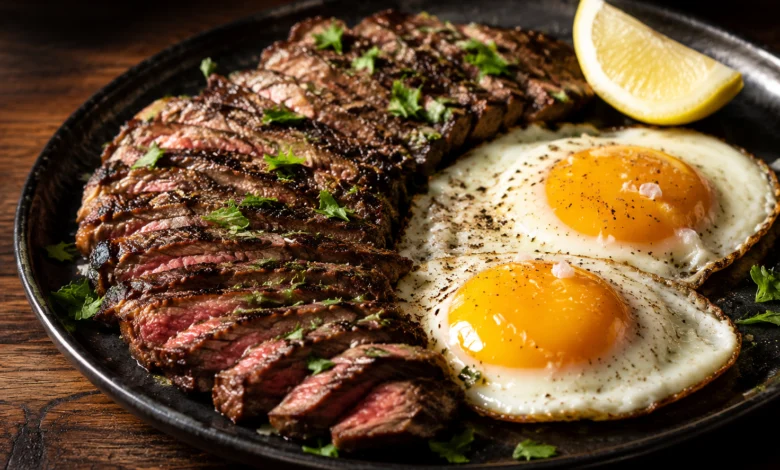
Most breakfast proteins disappoint. Bacon is great, but it’s not a meal on its own. Sausage works, but it’s processed. Steak at breakfast sounds indulgent, but once you’ve made it properly—a thin cut seared hard and fast in a screaming hot pan, rested briefly, and sliced against the grain—it becomes the most practical high-protein breakfast in your rotation.
The problem most people run into is overcooking. Steak at breakfast usually means a thin cut, and thin cuts go from perfect to overdone in about 90 seconds if the heat isn’t managed correctly. Get the heat right and the timing right, and you’re looking at a restaurant-level breakfast that costs less than a drive-through and takes about 20 minutes from pan to plate.
After testing this with skirt steak, flat iron, and sirloin across a dozen different mornings, this version consistently delivers the best texture and flavor balance with the least margin for error.
Quick Answer
What it is: A classic American breakfast of pan-seared steak served alongside fried or scrambled eggs, seasoned simply and cooked fast in a cast iron or stainless skillet.
Why make it? It’s high in protein, genuinely satisfying, ready in under 20 minutes, and far more interesting than any standard breakfast option.
Total time: 20 minutes—5 minutes prep, 12 to 15 minutes cook.
Difficulty Level
Intermediate. The technique is straightforward, but timing matters. A thin steak cooked in a screaming-hot pan has a small window between perfect and overdone. Follow the cues and you’ll nail it consistently.
Recipe Highlights
- Ready in 20 minutes from start to finish
- High protein — around 45 to 50g per serving
- One skillet for both the steak and eggs — minimal cleanup
- Works with multiple steak cuts at different price points
- Naturally gluten-free and dairy-free as written
- Simple seasoning that lets the steak flavor come through
Why This Recipe Works
The biggest mistake people make with breakfast steak is treating it like a dinner steak. Breakfast cuts are thinner, cook faster, and need higher heat to develop proper crust without overcooking the interior.
The method here uses a dry-brined steak—salted at least 15 minutes before cooking—which draws surface moisture out and then back in, resulting in better crust formation and more evenly seasoned meat. The pan goes in dry and hot before any fat is added, which means the steak hits maximum searing temperature the moment it makes contact.
The eggs cook in the same pan after the steak rests, using the residual fat and flavor left behind. Nothing goes to waste, and the eggs pick up a subtle depth from the beef drippings that you simply don’t get from a clean pan.
The 3-Step Plan
Step 1—Dry Brine the Steak
Season the steak generously with salt and pepper at least 15 minutes before cooking. Let it sit at room temperature while the pan heats.
Step 2 — Sear Hard and Fast
Heat a cast-iron skillet until it’s smoking. Add a small amount of high-heat oil, lay the steak in, and don’t touch it for 2 to 3 minutes per side depending on thickness. Rest for 5 minutes.
Step 3 — Cook the Eggs in the Same Pan
Reduce the heat, add a little butter to the residual drippings, and cook your eggs directly in the same skillet. Serve immediately alongside the sliced steak.
Ingredient Notes
The steak cut matters more at breakfast than at dinner because you’re working with less margin for error. Skirt steak is my first choice—it’s thin, cooks fast, has excellent flavor, and responds well to high heat. Flat iron is a close second. Sirloin works if that’s what you have but needs a slightly longer cook time. Avoid ribeye for this recipe—the fat content needs more time to render than a fast breakfast cook allows.
Salt is the only seasoning the steak really needs. A generous amount applied 15 minutes ahead pulls surface moisture out, which then gets reabsorbed as a seasoned liquid that penetrates the meat. This is called dry brining, and it makes a noticeable difference in both crust and flavor.
Black pepper goes on just before the steak hits the pan, not during the rest period. Pepper added too early can scorch at the high temperatures needed for proper searing.
The cooking fat needs to handle high heat without burning. Avocado oil is my go-to — it has a high smoke point and neutral flavor that doesn’t compete with the steak. Ghee works equally well. Regular butter will burn at searing temperatures.
Eggs are flexible. Fried eggs with runny yolks are the classic pairing—the yolk acts as a sauce for the steak slices. Scrambled eggs work if you prefer something more casual. Over-easy gives you the yolk benefit with slightly more set whites.
Ingredients
Steak
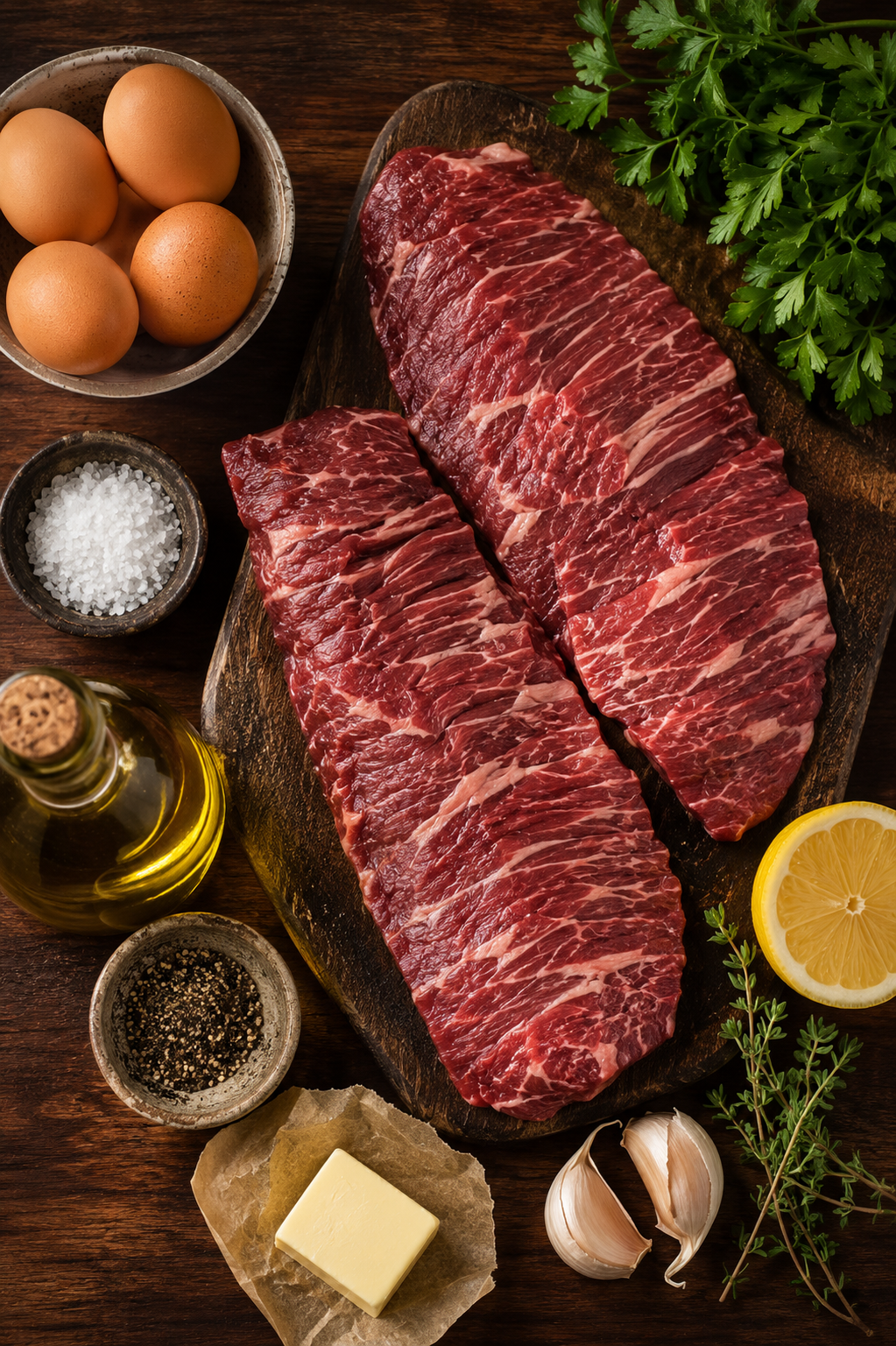
- 2 skirt steaks or flat iron steaks (6 to 8 oz / 170 to 225g each), about 1/2 inch thick
- 1 teaspoon kosher salt
- 1/2 teaspoon black pepper, added just before cooking
- 1 tablespoon avocado oil or ghee
- 1 tablespoon unsalted butter, for basting (optional)
- 2 garlic cloves, smashed (optional)
- Fresh thyme sprigs (optional)
Eggs
- 4 large eggs
- 1 tablespoon unsalted butter
- Salt and black pepper to taste
To Serve (optional)
- Fresh flat-leaf parsley, chopped
- Flaky sea salt for finishing
- Hot sauce
- Sliced avocado
- Roasted cherry tomatoes
Step-by-Step Instructions
Step 1—Season the Steak Early
Pat both steaks completely dry with paper towels—surface moisture is the enemy of a good crust. Season generously on both sides with kosher salt. Let them sit uncovered at room temperature for at least 15 minutes. If you have 30 minutes, even better. While they rest, get everything else prepped and your pan heating.
Step 2—Heat the Pan
Place a cast iron skillet or heavy stainless pan over high heat for a full 3 minutes. The pan needs to be properly preheated—not just warm but genuinely hot. Hold your palm about 4 inches above the surface, and you should feel intense radiant heat. A drop of water flicked onto the surface should vaporize immediately rather than just sizzling. This level of heat is what creates the crust.
Step 3 — Add the Oil and Sear
Add the avocado oil and swirl to coat. It should shimmer and begin to smoke immediately. Add the steaks away from you and press them flat against the pan surface for the first 10 seconds—this ensures full contact and even crust development. Do not move them for 2 minutes. You’re listening for a constant aggressive sizzle. If the sizzle dies down, the pan has lost heat—increase the burner slightly.
Step 4 — Flip and Finish
Flip the steaks once. If you’re using butter, add it now along with the smashed garlic and thyme. Tilt the pan slightly and use a spoon to baste the steak repeatedly with the foaming butter for the last 60 to 90 seconds of cooking. For a half-inch skirt steak, 2 minutes on the first side and 90 seconds on the second side give you medium—still slightly pink in the center. In my experience, skirt steak at medium is the sweet spot—any more and it starts getting chewy.
Step 5—Rest the Steak
Transfer the steaks to a cutting board and let them rest for 5 full minutes. Do not cut into them early. The rest period allows the juices to redistribute—cut too soon and they run out onto the board rather than staying in the meat. While the steak rests, cook the eggs.
Step 6 — Cook the Eggs
Reduce the heat to medium. Add the butter to the same pan with the residual steak drippings. The butter will foam and take on a slightly brown, nutty note from the drippings—this is exactly what you want. Crack the eggs in gently. Season with salt and pepper. For fried eggs with runny yolks, cover the pan and cook for 1.5 to 2 minutes. For over easy, flip carefully after 2 minutes and cook 30 more seconds.
Step 7 — Slice and Serve
Slice the rested steak against the grain—this is non-negotiable for skirt steak especially. Skirt steak has very visible long muscle fibers running lengthwise, and cutting with the grain rather than across it results in chewy, tough slices. Cut at a slight angle across the grain into half-inch strips. Plate alongside the eggs, add your chosen garnishes, and finish with flaky salt. Serve immediately.
Expert Tips
- The dry brine is worth the 15 minutes. I used to skip it on busy mornings, and the difference in crust quality is noticeable. Salt the steak while the coffee brews and you won’t need to think about it again.
- Cast iron holds heat better than any other pan for this application. If you’re using stainless, preheat it slightly longer to compensate. Nonstick pans can’t handle the temperatures needed for proper steak searing—avoid them here.
- Skirt steak is sold both inside and outside the skirt at most butcher counters. Outside skirt has more marbling and better flavor—ask for it specifically if you have the option.
- Let the butter brown slightly before adding the eggs. The nutty depth it picks up from the steak drippings changes the flavor of the eggs in a way that’s hard to explain but immediately noticeable.
- For a leaner option, swap skirt steak for flank steak and reduce cook time by about 30 seconds per side since flank tends to be slightly thicker but leaner.
Common Mistakes
Mistake 1 — Not Drying the Steak Before Seasoning
Cause: Surface moisture creates steam in the pan rather than allowing direct contact between the meat and the hot metal surface. Steam prevents crust formation. Fix: Pat both sides completely dry with paper towels before seasoning. This single step makes a significant difference in crust quality.
Mistake 2 — Underpowered Pan Temperature
Cause: A pan that isn’t hot enough before the steak goes in produces a gray, steamed exterior rather than a properly seared crust. Fix: Heat the pan for a full 3 minutes on high before adding any fat. The surface should be visibly smoking before the oil goes in.
Mistake 3 — Moving the Steak Too Soon
Cause: The steak will naturally stick to the pan initially while the crust forms. Trying to move it before the crust sets tears the surface and prevents even browning. Fix: Lay the steak down and don’t touch it for at least 2 full minutes. When the crust has formed properly, it releases from the pan naturally.
Mistake 4 — Cutting Against the Wrong Direction
Cause: Slicing skirt steak with the grain rather than across it results in long muscle fibers that require significant chewing. Fix: Look at the direction of the muscle fibers running across the surface of the steak and cut perpendicular to them. A slight diagonal angle also helps.
Mistake 5 — Skipping the Rest Period
Cause: Cutting into steak immediately after cooking releases the juices that haven’t had time to redistribute through the meat. Fix: Five minutes of rest on a cutting board, tented loosely with foil if your kitchen is cold. The internal temperature continues rising slightly during this time as well.
Mistake 6 — Overcooking Thin Cuts
Cause: Thin breakfast steaks have very little margin between rare and well-done. A minute too long at high heat pushes them past the ideal texture range quickly. Fix: Use a timer, not intuition, for the first few times you make this. 2 minutes per side for a half-inch cut at high heat gives you medium. Adjust from there based on your preference.
FAQ
What is the best steak cut for breakfast?
Skirt steak is the most reliable choice for breakfast—it’s thin, cooks fast, has excellent flavor from its higher fat content, and is widely available. Flat iron is a close second. Both cook to a good result in under 5 minutes of total cooking time.
Can I use a frozen steak?
You can, but thaw it completely in the refrigerator overnight first. Never cook a steak from frozen for this recipe—the surface will cook long before the interior reaches a safe temperature, and you’ll end up with a burnt exterior and cold center.
How do I know when the steak is done without a thermometer?
For a half-inch skirt steak at medium, 2 minutes on the first side and 90 seconds on the second at high heat is a reliable guideline. The steak should feel slightly firm but still have a small amount of give when pressed in the center. If you have a thermometer, 130 to 135°F is medium for beef.
Can I make this ahead of time?
The eggs should always be cooked fresh. The steak can be seared ahead, cooled, sliced, and refrigerated for up to 2 days. Reheat steak slices in a hot, dry skillet for 60 seconds rather than microwaving—the microwave continues cooking the steak and makes it tough.
What sides work well with a steak and eggs breakfast?
Roasted sweet potatoes are a natural pairing — the sweetness works well against the savory steak. Sliced avocado adds creaminess. Roasted cherry tomatoes add brightness. Keep sides simple so the steak stays the focus.
Is steak and eggs actually a good breakfast nutritionally?
Yes — it’s high in complete protein, provides B vitamins and iron from the beef, and contains healthy fat from the egg yolks. Paired with some vegetables or avocado, it’s one of the most nutritionally complete breakfast options available.
Storage and Reheating
Room Temperature
Do not leave cooked steak at room temperature for more than 2 hours.
Refrigerator
Store cooked steak slices in an airtight container for up to 3 days. Store eggs separately and cook fresh when possible.
Freezer
Cooked steak slices freeze well. Cool completely, wrap tightly in plastic wrap, then seal in a zip-lock freezer bag. Keeps for up to 2 months. Thaw overnight in the refrigerator before reheating.
Reheating
Reheat steak slices in a hot dry skillet for 45 to 60 seconds per side. This restores some of the crust and keeps the interior from overcooking. Avoid the microwave—it makes steak tough and gray. Always cook eggs fresh.
Variations
Chimichurri Steak and Eggs
Serve the sliced steak topped with a generous spoonful of fresh chimichurri—parsley, garlic, red wine vinegar, olive oil, and red pepper flakes blended roughly. The bright acidity cuts through the richness of both the steak and the egg yolk. One of the best versions of this dish.
Spicy Korean-Inspired Steak and Eggs
Marinate the steak for 30 minutes in a mixture of soy sauce, sesame oil, grated ginger, garlic, and a small amount of gochujang before cooking. Serve over steamed rice with a fried egg and sliced green onions. A different direction entirely but worth trying.
Steak and Egg Breakfast Bowl
Skip the toast format entirely. Build a bowl with roasted sweet potato cubes as the base; add sliced steak, a fried egg, sliced avocado, pickled red onion, and a drizzle of hot sauce. Fully customizable and easy to scale for multiple people.
Steak and Scrambled Eggs
Instead of fried eggs, make soft scrambled eggs in the same pan after the steak rests—low heat, constant gentle stirring, and pulled off the heat while still slightly wet. Serve the scrambled eggs alongside or underneath the sliced steak. A softer, more cohesive version of the same meal.
Budget-Friendly Sirloin Version
Replace skirt steak with top sirloin. Season the same way but add 30 seconds per side to the cook time since sirloin is typically slightly thicker. Less marbling than skirt but still produces a satisfying result at a lower price point.
Nutrition
Per serving based on 2 servings with skirt steak and 2 fried eggs—estimated.
- Calories: 520 kcal
- Protein: 48g
- Carbohydrates: 1g
- Fat: 35g
- Saturated Fat: 12g
- Fiber: 0g
- Sugar: 0g
- Sodium: 620mg
Recipe Card
- Recipe Name: Steak and Eggs Breakfast Recipe
- Prep Time: 5 minutes
- Cook Time: 12 to 15 minutes
- Total Time: 20 minutes
- Servings: 2
- Calories: 520 kcal per serving (estimated)
- Category: Breakfast
- Cuisine: American
- Method: Stovetop
- Difficulty: Intermediate