
Korean Breakfast Recipe (Traditional, Easy, and Ready in 30 Minutes)
Savory, warming, and more satisfying than anything you'll find in a cereal box


If you grew up in the US, breakfast probably means something sweet, something rushed, or something that came out of a box. Korean breakfast is the opposite of all three.
A traditional Korean breakfast looks a lot like dinner — and that’s exactly the point. Rice, soup, a few small banchan dishes, and maybe an egg. It sounds like a lot until you actually sit down to eat it, and then it makes complete sense. You’re full, you’re satisfied, and you’re not reaching for a snack an hour later.
I first made a proper Korean breakfast on a slow Saturday morning when I had leftover rice and a block of tofu. What started as a clean-out-the-fridge experiment became a regular part of my weekend rotation.
Quick Answer
A traditional Korean breakfast typically includes steamed white rice, a light soup (often doenjang jjigae or miyeok guk), a protein like egg or grilled fish, and two to three small banchan side dishes—kimchi, seasoned spinach, and pickled vegetables being the most common. The meal is savory, warming, and built for lasting energy rather than a quick sugar spike.
Difficulty Level
Beginner to Intermediate
If you have leftover rice and basic Korean pantry staples, a simple Korean breakfast comes together in about 20 minutes. A full spread with homemade soup and multiple banchan takes closer to 45 minutes, but nothing about it is technically difficult—it’s mostly timing and organization.
Recipe Highlights
- Savory, warming, and genuinely filling from the first bite
- Built around leftover rice — no morning cooking required for the base
- Naturally balanced with protein, vegetables, and fermented foods
- Completely customizable — use whatever banchan you have on hand
- Far more nutritious than a typical Western breakfast without feeling heavy
Why This Approach Works
Korean breakfast is built on a principle most Western breakfasts ignore: sustained energy over immediate satisfaction. Rice provides slow-releasing carbohydrates. Soup hydrates and warms the body from the inside. Fermented banchan like kimchi support digestion. A protein—egg, tofu, or fish—anchors the meal and keeps hunger at bay for hours.
The other reason this works so well in a home kitchen is that most of the components can be prepared ahead. Banchan keeps in the refrigerator for days. Soup reheats perfectly. The only thing that genuinely benefits from being made fresh is the egg.
In my kitchen, Korean breakfast has become the most reliable way to use leftover rice well. Day-old rice actually works better here than freshly cooked—it’s drier, which means it heats faster and absorbs flavors more efficiently.
The 3-Step Plan
Step 1 — Start With Rice and Soup
Reheat leftover rice covered with a damp paper towel in the microwave for 90 seconds, or warm it in a small pot with a splash of water over low heat. If you’re making soup, start it first—doenjang jjigae takes about 15 minutes from scratch, and miyeok guk takes about 20.
Step 2 — Prepare Your Protein
A fried or soft-boiled egg is the fastest option and works with everything else on the table. Grilled mackerel or pan-fried tofu are the more traditional choices and take about 8 minutes each. Pick one and cook it while the soup simmers.
Step 3 — Pull the Banchan Together
Pull kimchi, pickled vegetables, or any seasoned side dishes from the refrigerator 10 minutes before eating. Serve at room temperature—cold banchan straight from the fridge dulls the flavor significantly.
Ingredient Notes
Short-grain white rice—the foundation of every Korean meal, including breakfast. Short-grain rice has a slightly sticky, cohesive texture that pairs naturally with brothy soups and saucy banchan. Medium-grain works in a pinch. Long-grain varieties like jasmine or basmati are too dry and separate for this context.
Doenjang—Fermented Korean soybean paste. Deeper, earthier, and more complex than Japanese miso, though miso works as a substitute when doenjang isn’t available. The flavor difference is noticeable but not disqualifying. Doenjang jjigae (soybean paste stew) is the most common Korean breakfast soup and one of the most comforting things you can make in under 20 minutes.
Gochugaru — Korean red pepper flakes. Used in kimchi and many banchan. Milder and fruitier than standard chili flakes, with a color that’s more orange-red than deep red. Not directly substitutable with Italian chili flakes — the flavor profile is different enough to matter.
Sesame oil—Finishing oil only, never for cooking. A few drops added at the end of a dish or drizzled over rice adds a nutty, toasty depth that nothing else replicates. Buy toasted sesame oil specifically—plain sesame oil has almost no flavor by comparison.
Kimchi—the most essential banchan. Well-fermented kimchi (at least 2 to 3 weeks old) has a tangier, more complex flavor than fresh kimchi and works better alongside rice and soup. If your kimchi is very fresh and mild, a quick sauté in a dry pan for 2 minutes intensifies the flavor significantly.
Eggs—soft-boiled, fried in sesame oil, or steamed gyeran jjim (Korean steamed egg)—are all common at a Korean breakfast table. Gyeran jjim—eggs steamed in a small stone pot or ceramic bowl until custardy and soft—is one of the most satisfying and underrated breakfast preparations in Korean cooking.
Dried seaweed (miyeok)—The base ingredient for miyeok guk, a mild seaweed soup traditionally eaten on birthdays and after childbirth in Korean culture, but common at everyday breakfast tables too. Soak dried miyeok for 10 minutes before using—it expands dramatically.
Ingredients
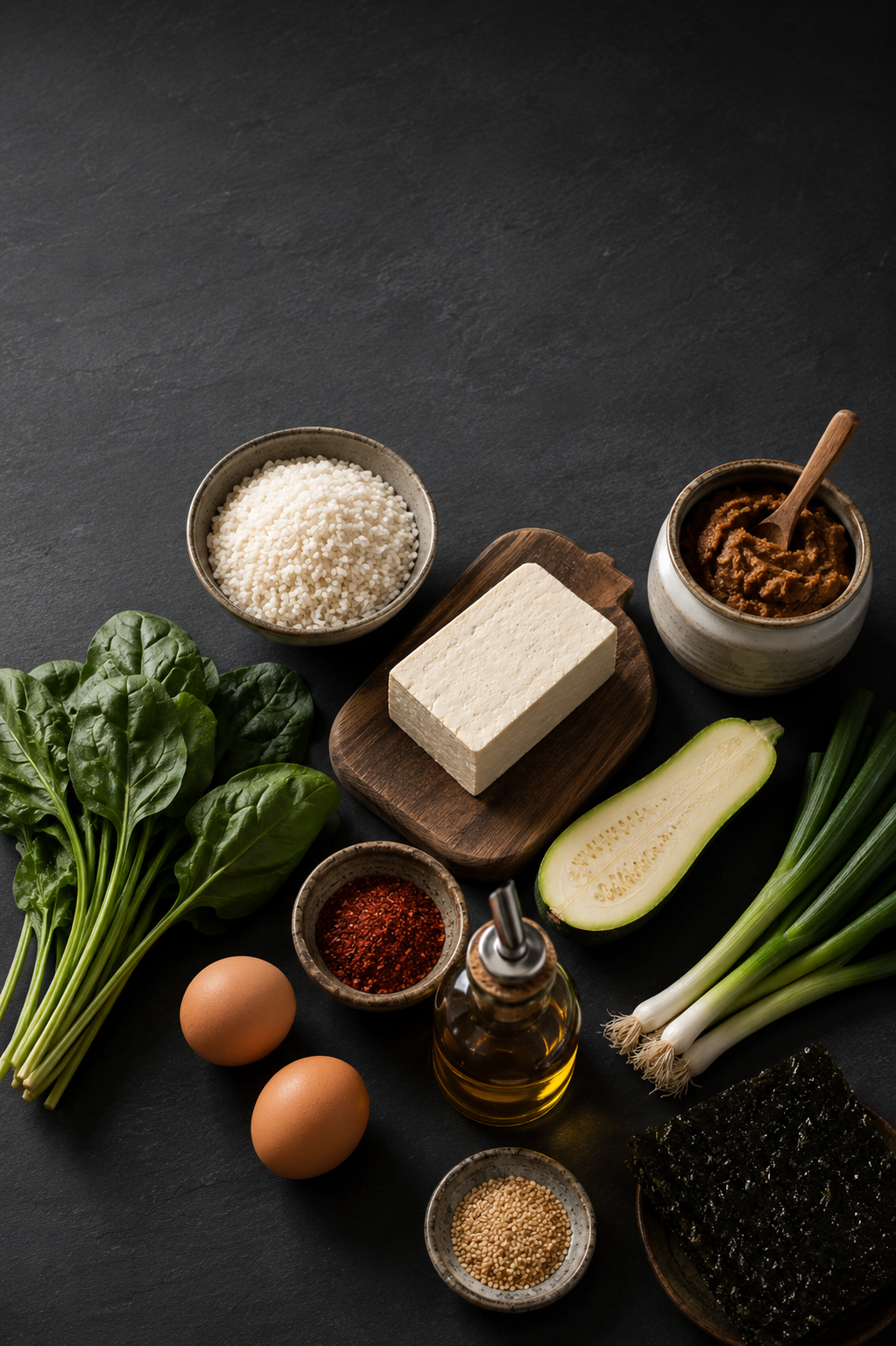
Rice Base
- 2 cups cooked short-grain white rice (day-old preferred)
Doenjang Jjigae (Soybean Paste Soup)
- 2 cups water or anchovy broth
- 1½ tablespoons doenjang (Korean soybean paste)
- ½ teaspoon gochugaru (optional, for mild heat)
- ½ block firm tofu, cubed
- ½ zucchini, diced small
- 2 green onions, sliced
- 1 teaspoon sesame oil (added at the end)
Protein — Choose One
- 2 large eggs (fried, soft-boiled, or steamed gyeran jjim style)
- 1 fillet mackerel or other oily fish, grilled or pan-seared
- ½ block firm tofu, pan-fried in neutral oil with a pinch of salt
Banchan (Side Dishes)
- ½ cup kimchi, served at room temperature
- 1 cup fresh spinach, blanched and seasoned with sesame oil, garlic, and salt
- ½ cup pickled radish (danmuji) or any pickled vegetables you have on hand
Seasoning and Finishing
- 1 tablespoon soy sauce
- 1 teaspoon sesame oil
- 1 teaspoon toasted sesame seeds
- 1 sheet roasted gim (Korean seaweed), torn into pieces
Step-by-Step Instructions
Step 1—Make the Doenjang Jjigae
Pour the water or anchovy broth into a small saucepan over medium heat. When it reaches a gentle simmer, whisk in the doenjang until fully dissolved—no lumps remaining. Add the zucchini and tofu and cook for 8 minutes until the zucchini is just tender.
Taste the broth before adding anything else. It should be savory and slightly funky, with a mellow saltiness that deepens as it sits. Adjust with a small additional amount of doenjang if needed. Add the green onions and gochugaru in the last 2 minutes. Finish with a few drops of sesame oil off the heat—never let sesame oil cook; it turns bitter quickly.
Step 2—Season the Spinach Banchan
Bring a small pot of water to a boil. Add the spinach and blanch for exactly 60 seconds — no longer. Drain immediately and rinse under cold water to stop the cooking. Squeeze out as much water as possible with your hands. The spinach should feel almost dry, not wet.
In a small bowl, toss the squeezed spinach with a few drops of sesame oil, a small pinch of salt, half a teaspoon of minced garlic, and a pinch of sesame seeds. Taste and adjust. This banchan should taste assertively seasoned on its own—it balances out when eaten alongside plain rice.
Step 3 — Cook the Egg
For a fried egg: heat a small pan over medium-low heat with a few drops of sesame oil. Crack the egg in and let it set slowly without touching it. The whites should be fully set and the yolk still runny—about 3 to 4 minutes. A fried egg cooked in sesame oil has a nutty, toasty quality that makes it taste fundamentally different from one cooked in butter or neutral oil.
For gyeran jjim: whisk 2 eggs with ¼ cup of water, a pinch of salt, and one sliced green onion. Pour into a small oven-safe ceramic bowl or stone pot. Cover tightly with foil and steam over low heat for 10 to 12 minutes until just set and slightly custardy in the center. The texture should wobble gently when you shake the bowl. I usually check at 10 minutes—my first few attempts went too long and turned spongy instead of soft.
Step 4—Warm the Rice
If using leftover rice, place it in a bowl, cover with a damp paper towel, and microwave for 90 seconds. Fluff with a fork or rice paddle. If the rice feels dry, add a small splash of water before covering—about a teaspoon is usually enough.
Step 5 — Assemble the Table
Set out the rice, soup, egg, and banchan in small separate dishes. Kimchi and pickled radish should be at room temperature—pull them from the refrigerator at the start of cooking. Tear a sheet of roasted gim into small pieces and serve alongside. Everything gets eaten together: a bite of rice with a bit of this and a sip of soup between bites. There’s no fixed order.
Expert Tips
- Day-old rice is better than fresh for breakfast. It reheats more evenly, has a firmer texture, and doesn’t clump or turn gluey in the bowl.
- Never boil doenjang at a hard boil. A gentle simmer preserves the fermented flavor and keeps the broth clear. Hard boiling makes it cloudy and slightly bitter.
- Sesame oil goes in at the end, off the heat. Heat destroys the toasted flavor that makes sesame oil worth using. Add it as a finisher, not a cooking fat.
- Pull banchan from the refrigerator 10 minutes before eating. Cold banchan tastes flat. Room temperature brings the fermented and seasoned flavors forward.
- Don’t skip the gym. A torn sheet of roasted Korean seaweed alongside rice and soup is one of those small additions that makes the meal feel complete. It adds a savory crunch that contrasts everything else on the table.
- Anchovy broth makes noticeably better jjigae than plain water. Simmer 4 to 5 dried anchovies in 2 cups of water for 10 minutes, remove the anchovies, and use the broth as your base. It takes 10 extra minutes and makes a significant difference.
Common Mistakes
Mistake 1 — Using Freshly Cooked Rice
Cause: Freshly cooked rice is too moist and sticky for breakfast reheating. It clumps, heats unevenly, and turns gluey when warmed again.
Fix: Use rice cooked the night before and stored uncovered in the refrigerator for a few hours. Day-old rice reheats cleanly and has a better texture for this kind of meal.
Mistake 2 — Over-Salting the Soup Before Tasting
Cause: Doenjang varies significantly in saltiness by brand. Adding soy sauce or extra doenjang without tasting first almost always results in an oversalted broth.
Fix: Add doenjang gradually, taste the broth before adding anything else, and only adjust with soy sauce at the very end if needed.
Mistake 3 — Cooking Sesame Oil
Cause: Sesame oil has a low smoke point and a delicate toasted flavor that breaks down quickly under heat. Cooking with it as a base oil produces a bitter, acrid result.
Fix: Use sesame oil exclusively as a finishing oil. Add it off the heat, right before serving.
Mistake 4 — Serving Banchan Cold
Cause: Cold temperatures suppress the fermented, garlicky, and sesame-forward flavors that make banchan interesting. Cold kimchi in particular tastes sharp and one-dimensional.
Fix: Remove banchan from the refrigerator 10 minutes before sitting down to eat. Room temperature is where the flavor opens up.
Mistake 5 — Overcooking the Gyeran Jjim
Cause: Too much heat or too long in the steamer produces a spongy, rubbery egg custard instead of the soft, wobbly, custardy texture that makes gyeran jjim worth making.
Fix: Steam on low heat only. Check at 10 minutes. The center should wobble when you shake the bowl—it will firm up slightly as it rests.
FAQ
What does a typical Korean breakfast look like?
A traditional Korean breakfast centers on steamed white rice, a light soup, one protein (egg, fish, or tofu), and two to three small banchan dishes. Kimchi is almost always present. The meal is savory rather than sweet and substantially more filling than most Western breakfast options.
Can I make Korean breakfast if I don’t have Korean ingredients?
A simplified version, yes. Japanese miso substitutes reasonably well for doenjang. Any short-grain white rice works. A plain fried or soft-boiled egg replaces gyeran jjim. Store-bought kimchi from an Asian grocery store is widely available and requires no preparation. The further you stray from Korean-specific ingredients, the less traditional the result — but the core structure of rice, soup, and a protein still holds.
Is Korean breakfast healthy?
By most nutritional measures, yes. A traditional Korean breakfast combines complex carbohydrates from rice, protein from eggs or fish or tofu, fermented probiotics from kimchi, and a variety of vitamins and minerals from vegetable banchan. It’s low in refined sugar, moderate in sodium (depending on doenjang and kimchi amounts), and high in fiber and micronutrients compared to most Western breakfast options.
What is doenjang, and where can I find it?
Doenjang is a fermented Korean soybean paste made from soybeans and salt. It has a deeply savory, earthy flavor with more complexity than Japanese miso—the two are related but distinct. It’s available at most Asian grocery stores, Korean markets, and, increasingly, at well-stocked general supermarkets. Online retailers also carry it reliably. Once opened, it keeps refrigerated for up to a year.
Can I use Japanese miso instead of doenjang?
Yes, as a substitute. Doenjang has a stronger, earthier flavor and a chunkier texture than most Japanese misos. White or yellow miso produces a milder, sweeter soup. Red miso comes closer to doenjang’s depth. The soup will still be good—it just won’t taste identical to a traditional doenjang jjigae.
What is gyeran-jjim?
Gyeran jjim is a Korean steamed egg dish—eggs whisked with water, seasoned with salt and green onion, then steamed slowly until the texture becomes soft and custardy, somewhere between a soft scramble and a savory pudding. It’s traditionally made in a small stone pot or ceramic bowl and served directly in the cooking vessel. It’s one of the most comforting things on a Korean breakfast table and takes about 12 minutes to make.
How do I make anchovy broth for the soup?
Add 4 to 5 dried anchovies (with heads and innards removed if possible) to 2 cups of cold water in a small saucepan. Bring to a simmer over medium heat and cook for 10 minutes. Remove the anchovies and use the broth immediately. It adds a quiet, savory depth to doenjang jjigae that plain water simply doesn’t provide.
Storage and Reheating
Room Temperature
Rice and soup should not sit at room temperature for more than 2 hours. Banchan can sit out during the meal without issue.
Refrigerator
- Doenjang jjigae: up to 3 days in an airtight container—the flavor actually deepens on day two
- Cooked rice: up to 4 days in an airtight container
- Spinach banchan: up to 3 days
- Kimchi: keeps for weeks and continues fermenting slowly in the refrigerator
Reheating
- Soup: Reheat gently over medium-low heat, stirring occasionally. Do not boil hard—it changes the flavor of the doenjang.
- Rice: Microwave covered with a damp paper towel for 90 seconds or warm in a small pot with a splash of water over low heat.
- Gyeran jjim: Best made fresh. Reheating changes the texture significantly.
- Banchan: Serve at room temperature directly from the refrigerator — no reheating needed.
Variations
Miyeok Guk (Seaweed Soup) Instead of Doenjang Jjigae
Soak 20g of dried miyeok in cold water for 10 minutes. Drain, squeeze dry, and cut into 2-inch pieces. Sauté briefly in a few drops of sesame oil, add 2 cups of water or beef broth, and simmer for 15 minutes. Season with soy sauce and salt. Mild, deeply nourishing, and one of the most traditional Korean breakfast soups alongside doenjang jjigae.
Japchae Rice Bowl
Toss cooked glass noodles (dangmyeon) with sautéed spinach, carrots, mushrooms, soy sauce, and sesame oil. Serve warm over rice with a soft-boiled egg on top. A heartier weekend option that uses the same pantry staples as the main recipe.
Kimchi Fried Rice Breakfast
Sauté day-old rice with chopped kimchi, a small amount of kimchi juice, and a drizzle of sesame oil over high heat until the rice picks up color and the kimchi caramelizes at the edges. Top with a fried egg and torn gim. This is what Korean breakfast looks like on a five-minute morning. Our Steak and Eggs Breakfast covers a similar high-protein morning plate from a different angle.
Tofu and Vegetable Breakfast Bowl
Pan-fry sliced firm tofu in neutral oil with a pinch of salt until golden on both sides. Serve over rice with blanched spinach banchan, kimchi, and a drizzle of soy sauce and sesame oil. Completely plant-based and substantially filling.
Juk (Korean Rice Porridge)
Cook short-grain rice with 5 to 6 times the usual amount of water over low heat for 30 to 40 minutes, stirring occasionally, until it breaks down into a thick, creamy porridge. Season with sesame oil, salt, and soy sauce. Top with a soft-boiled egg, sliced green onion, and sesame seeds. Gentler on digestion than whole rice and deeply comforting on cold mornings.
Nutrition
Per serving—Full Korean Breakfast (rice, doenjang jjigae, fried egg, spinach banchan, kimchi)
- Calories: 480
- Protein: 22g
- Carbohydrates: 58g
- Fat: 16g
- Sodium: 890mg
- Fiber: 6g