
Breakfast Spread Ideas (Easy, Beautiful, and Ready in 30 Minutes)
Everything on the table, nothing complicated in the kitchen

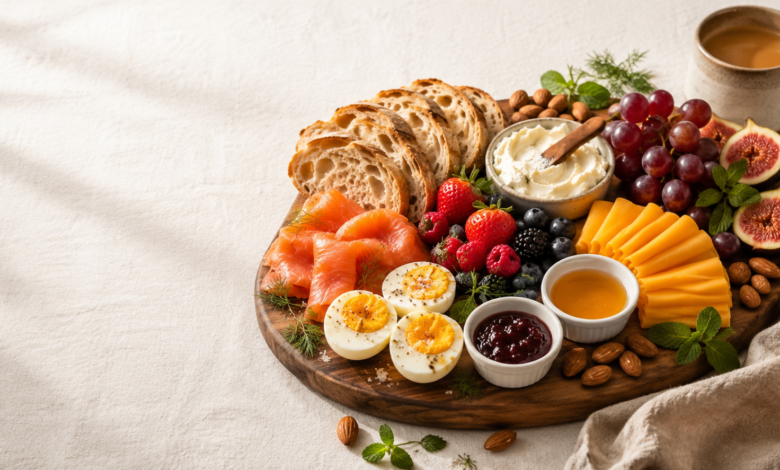
Most breakfast spreads look incredible in photos and fall apart in real life. Too many components that all need to be hot at the same time. Too much prep the morning of. Too many dishes to wash before you’ve even had your first coffee.
A breakfast spread should feel generous and effortless—not like a catering job. The secret is knowing which elements can be prepped ahead, which ones need to be made fresh, and how to arrange everything so it looks abundant without requiring three hours in the kitchen.
Quick Answer
A breakfast spread is a mix of sweet and savory morning foods served together on a large board, platter, or table—typically including eggs, bread, cheese, fruit, spreads, and something cured or smoked. The best versions balance textures and flavors, use at least two make-ahead components, and come together in 30 minutes or less the morning of.
Difficulty Level
Beginner
No advanced technique required. The skill here is organization and balance — knowing what to prep the night before and how to arrange everything so it looks intentional. If you can slice fruit and scramble eggs, you can build a beautiful breakfast spread.
Recipe Highlights
- Ready in 30 minutes with simple make-ahead prep the night before
- Serves 4 to 8 people with no last-minute stress
- Mix of sweet and savory so every preference is covered
- Completely customizable — swap components based on what you have
- Works for casual family mornings, weekend brunches, and entertaining guests
Why This Approach Works
The biggest mistake people make with breakfast spreads is trying to make everything hot and fresh at the same moment. It creates chaos, cold eggs, and a stressed host who doesn’t enjoy the meal they spent an hour building.
The better approach is to divide the spread into three categories: things you make the night before, things that need no cooking at all, and one or two hot components made fresh. With that structure in place, the morning becomes simple—assemble the board, make the eggs, done.
The other key is contrast. A spread that’s all sweet feels cloying. A spread that’s all savory feels heavy. The best breakfast boards move between flavors and textures — creamy next to crunchy, sweet next to salty, rich next to bright and acidic.
The 3-Step Plan
Step 1 — Prep the Night Before
Boil eggs, slice fruit, portion cheeses, and prepare any baked goods or overnight components. Cover and refrigerate. This single step eliminates 80% of morning stress.
Step 2 — Build the Board
Pull refrigerated items out 15 minutes before serving. Arrange on a large wooden board, slate platter, or directly on parchment paper across the table. Start with the largest items and fill in gaps with smaller components. The goal is abundance, not symmetry.
Step 3 — Make One Hot Component Fresh
Scrambled eggs, a frittata, or toast made right before serving gives the spread a warm anchor without requiring everything to be cooked simultaneously. One hot element is enough.
Ingredient Notes
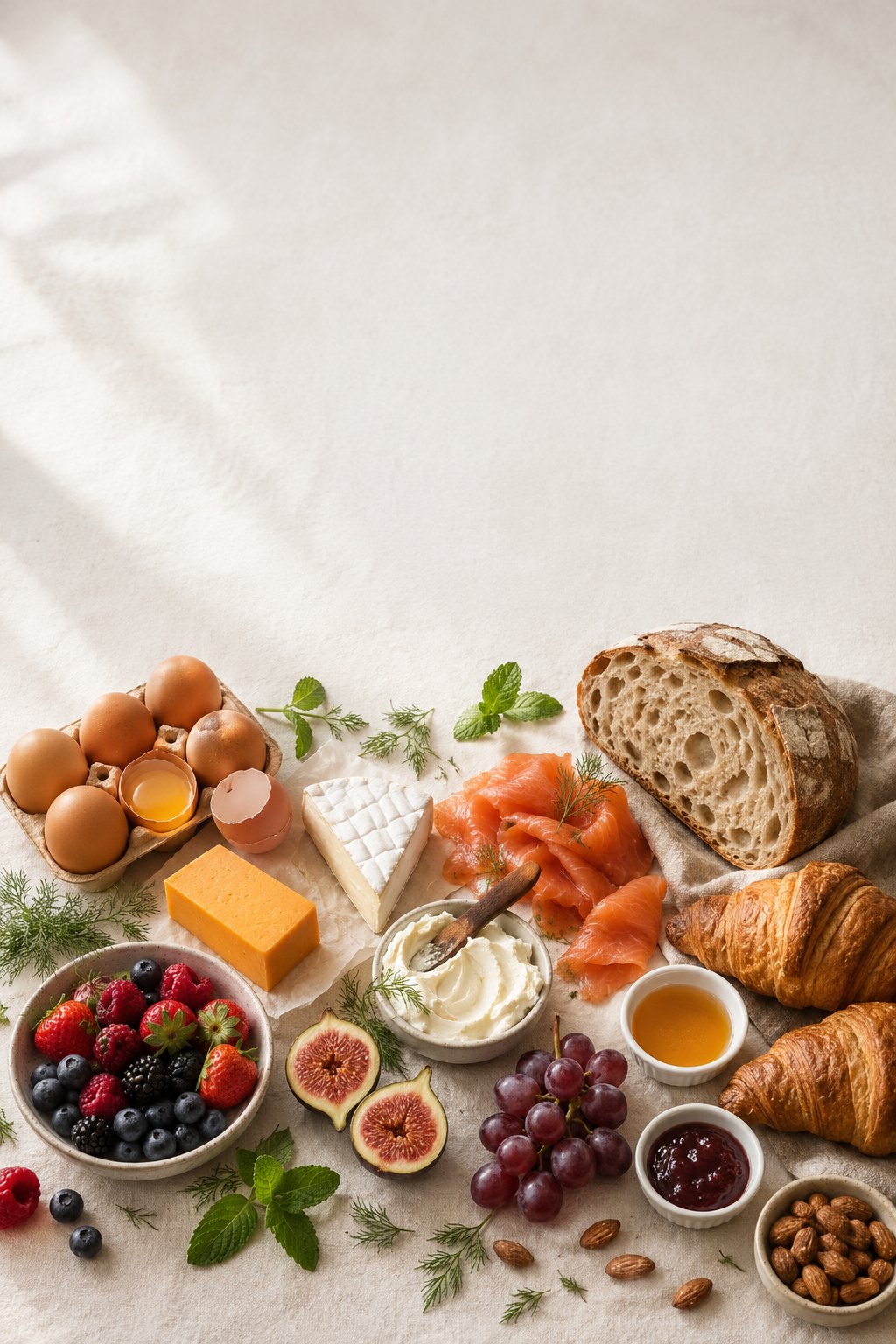
Eggs — The non-negotiable protein anchor of any breakfast spread. Hard-boiled eggs made the night before and sliced in half work beautifully with no morning effort. Soft scrambled eggs made fresh add warmth to the table. Both can coexist on the same board.
Bread and toast—variety matters more than quantity. A sourdough loaf, a few slices of seeded whole grain, and one sweet element—a croissant, a small muffin, or a slice of banana bread—give guests options without overwhelming the board.
Cheese—A soft cheese (cream cheese, ricotta, or brie), a semi-firm cheese (cheddar or gouda), and a crumbled cheese (feta) cover the full range. Cheese at room temperature tastes significantly better than cold cheese straight from the refrigerator—pull it out 20 minutes before serving.
Cured meats — Smoked salmon, prosciutto, or thinly sliced ham adds richness and a savory note that anchors the spread. Fold or layer rather than lying flat—it looks more generous and is easier to pick up.
Fresh fruit — The color anchor of the entire board. Berries, sliced citrus, halved figs, and grapes all work well. Cut fruit the night before and store it in an airtight container—it saves 10 minutes the morning of, and the quality holds well overnight.
Spreads — Cream cheese, butter, jam, honey, and hummus give guests ways to customize each bite. Use small ramekins or ceramic dishes rather than leaving spreads in their original packaging. The visual difference is significant.
Nuts and seeds—A small handful of toasted almonds, walnuts, or pistachios adds crunch and fills gaps on the board naturally. Toasted nuts taste noticeably better than raw ones—3 minutes in a dry skillet makes a real difference.
Fresh herbs and garnishes—A few sprigs of fresh dill alongside smoked salmon, fresh mint with the fruit section, or thinly sliced chives over the eggs ties the board together visually and adds flavor where it counts.
Ingredients
Protein
- 6 large eggs (4 hard-boiled, 2 soft-scrambled)
- 100g smoked salmon, folded
- 4 slices prosciutto or thinly sliced ham
Bread and Baked Goods
- ½ sourdough loaf, sliced
- 2 croissants, halved
- 4 slices seeded whole grain bread, toasted
Cheese
- 100g cream cheese or whipped ricotta
- 100g sharp cheddar or aged gouda, sliced
- 60g crumbled feta
Fresh Fruit
- 1 cup mixed berries (strawberries, blueberries, raspberries)
- 1 orange, peeled and segmented
- 1 cup green or red grapes
- 2 figs, halved (when in season)
Spreads and Condiments
- 3 tablespoons butter, softened
- 3 tablespoons your favorite jam or preserves
- 2 tablespoons honey
- 2 tablespoons whole-grain mustard
Extras
- ¼ cup toasted almonds or walnuts
- 1 tablespoon capers (alongside the smoked salmon)
- Fresh dill, fresh mint, and thinly sliced chives for finishing
- Flaky sea salt and black pepper
Step-by-Step Instructions
Step 1—Hard Boil the Eggs (Night Before)
Place eggs in a single layer in a small saucepan and cover with cold water by one inch. Bring to a boil over medium-high heat, then remove from heat immediately, cover, and let sit for 10 minutes. Transfer to an ice bath for 5 minutes, then peel and refrigerate in an airtight container overnight.
The morning of, slice in half lengthwise and season with flaky salt and a crack of black pepper. Arrange cut-side up on the board.
Step 2 — Prep Fruit and Cheese (Night Before)
Wash and dry all berries. Hull and halve strawberries. Peel and segment the orange. Store fruit in a covered container in the refrigerator. Slice the cheddar or gouda into thin pieces. Portion cream cheese or ricotta into a small ceramic dish. Cover and refrigerate.
Step 3 — Pull Everything From the Refrigerator
Remove cheese, spreads, and fruit 15 to 20 minutes before building the board. Cold cheese and cold fruit taste flat—room temperature brings the flavors forward noticeably.
Step 4 — Build the Board
Start with the largest anchors: the cheese dishes, the bowl of fruit, and the bread. Place these at different points across the board so the eye moves naturally. Add folded smoked salmon and prosciutto next, tucking them into gaps. Fill the remaining space with hard-boiled egg halves, clusters of grapes and berries, and small ramekins of spreads.
Scatter toasted nuts, capers, and fresh herbs across the board last—they fill gaps and add color without requiring any arrangement. The board should look full and slightly abundant, not rigidly organized.
Step 5 — Make the Scrambled Eggs Fresh
Right before sitting down, cook soft scrambled eggs in olive oil or butter over medium-low heat. Pull them just before fully set. Season well with salt and pepper, finish with fresh chives, and serve in a warm bowl placed directly on or beside the board. The warm eggs alongside the room-temperature spread are the contrast that makes the whole thing work.
Expert Tips
- Odd numbers look better on boards. Three types of cheese, five bread options, and two fruit clusters—odd groupings feel more natural and less rigid than even arrangements.
- Height creates visual interest. Stack a few slices of bread upright, fold prosciutto into loose ruffles, and use small bowls to lift spreads off the flat surface. A flat board looks sparse even when it isn’t.
- The 15-minute rule for cheese is not optional. Cold cheese has almost no aroma, and the texture is waxy. Room-temperature cheddar and brie taste like completely different products.
- Use parchment paper under everything if you don’t have a large board. A sheet of parchment across a dining table or baking sheet works just as well and makes cleanup significantly easier.
- More small dishes, fewer large platters. Small ramekins and ceramic bowls for spreads, nuts, and capers make the board feel curated. Everything piled on one large plate feels like leftovers.
- Fresh herbs are the fastest visual upgrade. A few sprigs of fresh dill and a handful of mint leaves transform a board that looks assembled into one that looks intentional.
Common Mistakes
Mistake 1 — Trying to Make Everything Hot at the Same Time
Cause: Managing multiple hot components simultaneously means something is always overcooked, cold, or forgotten by the time everything else is ready.
Fix: Make only one hot component fresh — scrambled eggs or toast. Everything else on the board works at room temperature or cold.
Mistake 2 — Not Pulling Cheese and Spreads Early Enough
Cause: Cold cheese tastes waxy and mild. Cold butter doesn’t spread. Cold cream cheese tears bread instead of gliding across it.
Fix: Pull all dairy components from the refrigerator at least 15 to 20 minutes before building the board. Set a timer if you need to.
Mistake 3 — Building the Board Too Early
Cause: Sliced fruit oxidizes, bread dries out, and cut eggs develop a grey ring around the yolk when assembled too far in advance.
Fix: Prep components the night before, but assemble the board no more than 20 to 30 minutes before serving.
Mistake 4 — Not Enough Contrast
Cause: A spread that’s all sweet or all savory, all soft or all crunchy, feels monotonous after the first few bites.
Fix: Deliberately include both sweet and savory elements, at least one crunchy component (toasted nuts, crackers, or seeded bread), and something acidic (capers, citrus, or jam with a tart note) to keep each bite interesting.
Mistake 5 — Forgetting Serving Utensils
Cause: Guests hesitate to serve themselves when there are no serving spoons, small tongs, or cheese knives on the board.
Fix: Place a small spoon in every spread bowl, a fork beside the smoked salmon, and a cheese knife beside each cheese. Guests serve themselves more generously when the tools are already there.
FAQ
How far in advance can I prep a breakfast spread?
Most components can be prepped the night before — hard-boiled eggs, sliced fruit, portioned cheese, and any baked goods. Assemble the board itself no more than 20 to 30 minutes before serving to keep bread from drying out and fruit from weeping.
How many people does a breakfast spread serve?
The quantities in this recipe serve 4 to 6 people comfortably as a full breakfast. For 8 to 10 people, increase the egg count to 10, add another 100g of smoked salmon, and double the bread and fruit. The spread format scales easily because most components require no cooking.
What is the best board or platter to use?
A large wooden cutting board, a slate cheese board, or a marble slab all work well. For larger gatherings, a sheet of parchment paper laid across a dining table gives you unlimited surface area with no equipment required. The board material matters less than the size — bigger is almost always better.
Can I make a breakfast spread without smoked salmon?
Absolutely. Replace smoked salmon with thinly sliced turkey, roast beef, or additional cheese. A fully vegetarian spread works beautifully with extra egg preparations, hummus, roasted vegetables, and a wider variety of cheeses.
What bread works best on a breakfast spread?
Sourdough is the most versatile—it slices cleanly, toasts well, and pairs with both sweet and savory toppings. Croissants add a buttery, flaky element. Seeded whole grain or rye bread adds color and a slightly nutty flavor. A mix of two to three bread types is always better than a large quantity of one.
Can I make a dairy-free breakfast spread?
Yes. Replace cream cheese and butter with avocado, hummus, or dairy-free cream cheese. Skip the cheddar and feta or use plant-based alternatives. The rest of the spread — eggs, smoked salmon, fruit, bread, nuts, and fresh herbs — is naturally dairy-free. Our dairy-free breakfast guide covers ingredient substitutions in more detail.
How do I keep the board looking full as guests eat from it?
Consolidate as you go — push remaining items toward the center of the board rather than leaving sparse gaps around the edges. Keep a small reserve of fruit, nuts, and bread nearby to refill the board mid-meal without any additional prep.
Storage and Reheating
Room Temperature
The assembled board should not sit out for more than 2 hours, particularly in warm weather. Eggs and smoked salmon are the most time-sensitive components.
Refrigerator
- Hard-boiled eggs: up to 1 week unpeeled, 3 days peeled in an airtight container
- Sliced fruit: up to 2 days, though best within 24 hours
- Portioned cheese: up to 5 days wrapped tightly
- Leftover smoked salmon: up to 2 days in an airtight container
Reheating
- Scrambled eggs: Best made fresh. Reheated scrambled eggs lose texture quickly.
- Bread and croissants: Warm in a 300°F oven for 5 minutes to refresh. Do not microwave them—it makes them tough.
- Hard-boiled eggs: Serve at room temperature. No reheating needed.
Variations
Sweet-Forward Breakfast Board
Center the spread around waffles or pancakes kept warm in a low oven, fresh berries, whipped cream, maple syrup, honey, and sliced bananas. Add a small dish of peanut or almond butter for protein. Skip the smoked salmon and cured meats entirely. Works well for children’s breakfasts and sweet-leaning crowds.
Mediterranean Breakfast Spread
Replace smoked salmon with marinated olives and roasted red peppers. Add hummus, labneh or thick Greek yogurt drizzled with olive oil, sliced cucumber, cherry tomatoes, and warm pita bread. Finish with fresh mint, za’atar, and a drizzle of good olive oil. Pairs naturally alongside our Avocado Breakfast guide for more ideas in this direction.
High-Protein Breakfast Board
Double the egg count, add sliced grilled chicken or turkey, increase the cheese variety, and add a small bowl of cottage cheese alongside the other spreads. Reduce the bread and sweet elements. Built for post-workout mornings or guests who prefer a lower-carb spread.
Holiday Breakfast Spread
Add a small dish of smoked trout or gravlax alongside the smoked salmon. Include mini bagels, everything bagel seasoning, and thinly sliced red onion. Add a fruit salad with pomegranate seeds for color. Finish the board with edible flowers if in season. The same structure, built for a more celebratory occasion.
Nutrition
Per person—estimated based on moderate servings across all components
- Calories: 520
- Protein: 24g
- Carbohydrates: 38g
- Fat: 28g
- Sodium: 740mg
- Fiber: 4g


