
Healthy Whole Wheat Veggie Pizza (Crispy Crust, Lighter Toppings)
A crispy whole wheat crust piled with veggies and just enough cheese to still taste like real pizza.

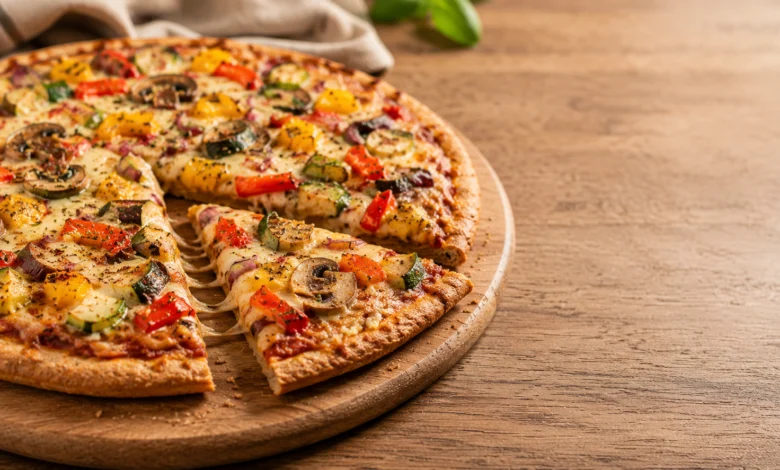
The problem with most “healthy” pizza isn’t the toppings; it’s the crust. Too much whole wheat flour and no real technique behind it, and you end up with something dense and cardboard-like that nobody actually wants to eat twice.
A blend of whole wheat and all-purpose flour, a slightly wetter dough, and a hot oven fix that problem completely. You still get a crust with a crisp bottom and a little chew, just with more fiber and a lighter overall feel than a typical takeout crust loaded with oil and refined flour.
From there, it’s really about restraint with the cheese and generosity with the vegetables, which is what actually makes a pizza feel lighter without feeling like a compromise.
Quick Answer
Mix a whole wheat and all-purpose flour dough, let it rise for about an hour, then stretch it thin and par-bake it briefly before adding a light layer of sauce, cheese, and vegetables. Finish baking in a very hot oven until the crust is crisp and the cheese is bubbling.
Difficulty Level
Intermediate. The dough itself is simple, but working with yeast and getting the crust properly crisp takes a little more attention than a no-rise recipe.
Recipe Highlights
- Crispy whole wheat crust with real chew, not dense or cardboard-like
- Lighter on cheese, heavier on vegetables, without skimping on flavor
- Par-baking the crust is the key step for crispness
- Customizable toppings for whatever’s in the fridge
- Freezer-friendly dough for pizza night on a whim
Why This Recipe Works
Whole wheat flour on its own absorbs more water and produces a denser, sometimes gummy crust. Blending it with some all-purpose flour keeps the fiber and nutty flavor of whole wheat while still letting the dough stretch thin and bake up with a proper crisp-chewy texture.
Par-baking the crust for a few minutes before adding toppings matters just as much as the dough itself. It sets the surface so the crust doesn’t turn soggy under the sauce and vegetables, which is the most common reason homemade pizza ends up limp in the middle.
The 3-Step Plan
Step 1
Mix and rise the whole wheat pizza dough.
Step 2
Stretch the dough and par-bake the crust briefly.
Step 3
Top with sauce, a light layer of cheese, and vegetables, then bake until crisp and bubbling.
Ingredient Notes
Whole wheat flour brings fiber and a nutty flavor. Using it alone tends to make a dense crust, so pairing it with all-purpose flour keeps things lighter.
All-purpose flour balances the whole wheat flour, giving the dough enough stretch to roll thin without tearing.
Instant yeast skips the proofing step needed for active dry yeast, which speeds things up slightly, though active dry yeast works fine too with a short proof in warm water first.
Olive oil in the dough adds tenderness and helps the crust crisp up nicely in a hot oven.
Part-skim mozzarella melts well and tastes plenty cheesy without the greasiness of full-fat mozzarella in a large quantity.
Pizza sauce should be a thin layer; a heavy-handed sauce layer is one of the most common reasons a crust turns soggy.
If you’re short on time, a store-bought whole wheat pizza dough can substitute for the homemade dough; just let it come to room temperature before stretching.
Ingredients
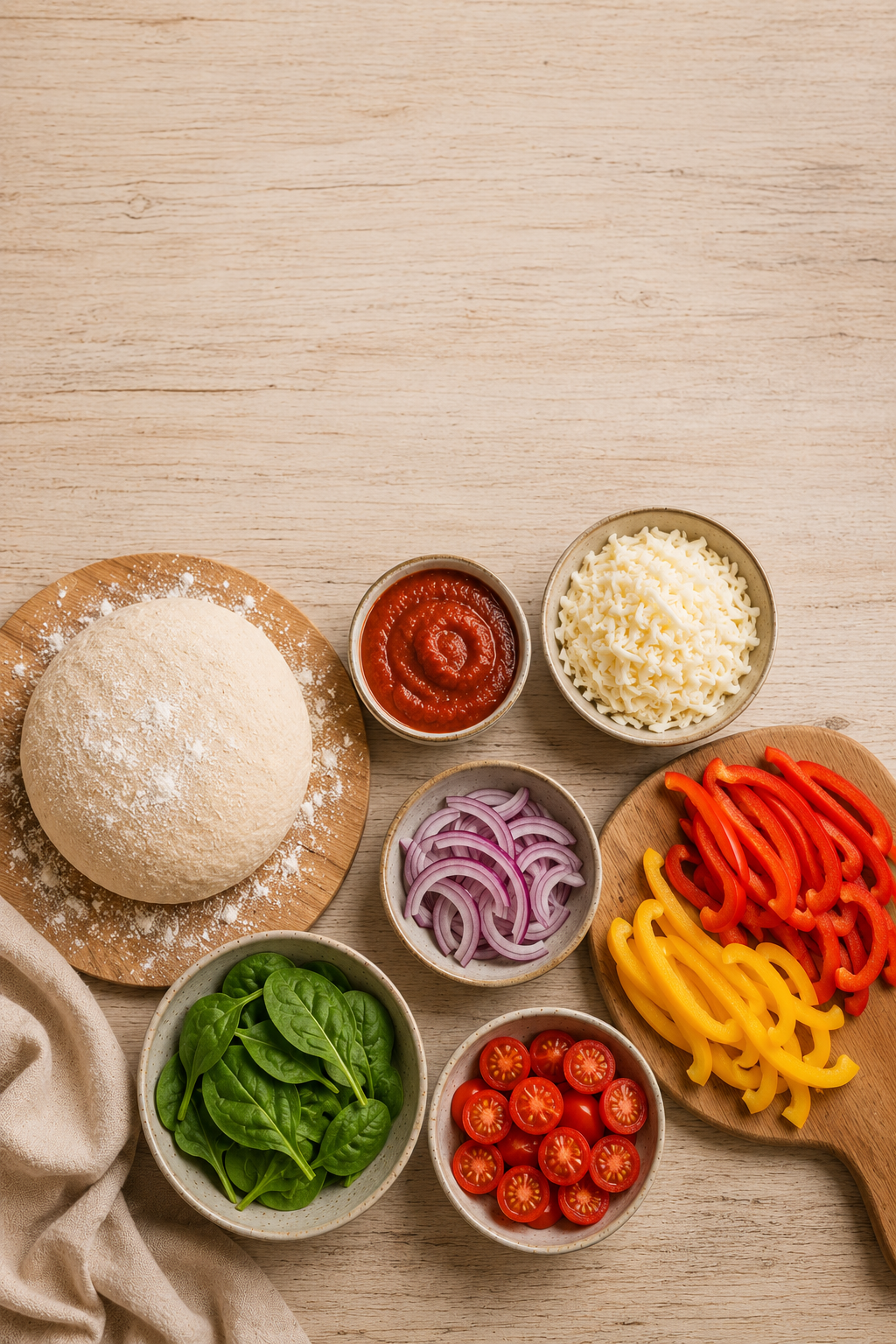
Dough
- 1 cup whole wheat flour
- 1 cup all-purpose flour, plus more for dusting
- 2 1/4 teaspoons instant yeast
- 3/4 teaspoon salt
- 3/4 cup warm water
- 1 tablespoon olive oil, plus more for the bowl
Toppings
- 1/2 cup pizza sauce
- 1 1/4 cups part-skim mozzarella, shredded
- 1 cup bell peppers, thinly sliced
- 1/2 cup red onion, thinly sliced
- 1 cup baby spinach
- 1/2 cup cherry tomatoes, halved
- Red pepper flakes, optional
Step-by-Step Instructions
Step 1—Mix and knead the dough
In a large bowl, whisk together the whole wheat flour, all-purpose flour, instant yeast, and salt. Add the warm water and olive oil, then mix with a spatula until a shaggy dough forms. Turn out onto a lightly floured surface and knead for 6-8 minutes until smooth and elastic.
Step 2—Let the dough rise
Place the dough in a lightly oiled bowl, cover, and let rise in a warm spot for about 1 hour, until roughly doubled in size.
The first time I rushed this rise in a cold kitchen, the dough barely puffed up and the crust baked flat and tough, so now I let it sit somewhere genuinely warm, even the inside of a turned-off oven with the light on.
Step 3—Stretch the dough
Punch down the dough and turn it out onto a floured surface. Stretch or roll it into a 12-inch round, working from the center outward and leaving the edges slightly thicker for a natural crust border. Transfer to a pizza stone, preheated baking sheet, or parchment-lined pan.
Step 4—Par-bake the crust
Bake the plain crust at 475°F for 5-6 minutes, until it’s just set and lightly dry on top but not browned. This short par-bake is what keeps the finished pizza from turning soggy once the toppings go on.
Step 5 — Add toppings and finish baking
Spread the pizza sauce in a thin, even layer, leaving a border for the crust. Sprinkle with mozzarella, then arrange the bell peppers, red onion, spinach, and cherry tomatoes on top. Return to the oven and bake for another 10-12 minutes, until the crust is golden and the cheese is bubbling and lightly browned in spots.
In my oven, the cheese usually hits that perfect bubbly-golden spot right around 11 minutes, though a pizza stone will get you there a bit faster than a regular baking sheet.
Expert Tips
- Don’t skip the par-bake; it’s the single biggest factor in getting a crisp bottom instead of a soggy center
- Keep the sauce layer thin; more isn’t better here
- A pizza stone or steel preheated in the oven gives a noticeably crispier bottom crust than a cold baking sheet
- Let the dough come fully to room temperature before stretching if it’s been refrigerated; cold dough tears more easily
- Slice with a sharp pizza cutter or knife right after baking while the cheese is still warm and set enough to hold its shape
Common Mistakes
Mistake 1—Crust turns out soggy in the middle
Cause: Skipping the par-bake or too much sauce.
Fix: Always par-bake the plain crust for 5-6 minutes before adding toppings, and keep the sauce to a thin, even layer.
Mistake 2—Crust is dense and tough instead of light
Cause: The dough didn’t rise long enough, or too much flour was worked in while kneading.
Fix: Let the dough rise in a genuinely warm spot until it’s roughly doubled, and add flour sparingly while kneading, just enough to keep it from sticking.
Mistake 3 — Vegetables release too much water onto the pizza
Cause: Watery vegetables like tomatoes or mushrooms added raw in large quantities.
Fix: Halve cherry tomatoes and let them sit cut-side up on a paper towel for a few minutes before topping, and don’t overload the pizza with high-moisture vegetables.
FAQ
Can I freeze this?
Yes, the raw dough freezes well. Wrap it tightly after the first rise and freeze for up to 3 months, then thaw in the refrigerator overnight before stretching and baking as usual.
Can I make it ahead?
Yes. The dough can be made a day ahead and left to rise slowly in the refrigerator, which also improves the flavor. Bring it to room temperature before stretching.
Why did my texture turn out wrong?
A soggy center almost always traces back to skipping the par-bake or using too much sauce. A tough crust usually means the dough didn’t rise long enough or got over-floured during kneading.
Can I use a different flour ratio?
Yes, you can go up to a full whole wheat crust, though it will be noticeably denser and chewier. The half whole wheat, half all-purpose blend gives the best balance of fiber and lightness.
Can I make this dairy-free?
A dairy-free mozzarella shred works reasonably well here, though the melt and stretch won’t be quite identical to real mozzarella.
Storage and Reheating
Room Temperature
Not recommended for more than 2 hours.
Refrigerator
Store leftover slices in an airtight container for up to 4 days.
Freezer
Freeze baked, cooled slices in a freezer bag for up to 2 months.
Reheating
Reheat in a 400°F oven or toaster oven for 5-8 minutes for the crispest crust; microwaving works in a pinch but softens the crust.
Variations
White Veggie Pizza
Skip the tomato sauce and use a thin layer of olive oil and garlic instead, topped with mozzarella, spinach, and mushrooms.
BBQ Chicken Pizza
Swap the pizza sauce for BBQ sauce and top with shredded cooked chicken, red onion, and a lighter amount of mozzarella.
Personal-Sized Pizzas
Divide the dough into 4 portions and stretch into individual rounds, great for letting everyone build their own.
Nutrition
Estimated per slice, based on 8 slices
- Calories: 190
- Protein: 9g
- Carbohydrates: 26g
- Fat: 6g
- Sodium: 340mg